
Recovery Journey After Lung Cancer Surgery: What Patients Should Know
When you wake up after lung cancer surgery, your recovery’s only just beginning, and it won’t be a straight line. You’ll notice monitors, tubes, and a dry or sore throat, and you may feel more tired than you expected. You might wonder how much you should move, when the pain will ease, and when life will feel normal again. To plan your days and protect your lungs, it helps to know what usually happens next.
Recovery After Lung Cancer Surgery: What To Expect
Waking up after lung cancer surgery can feel disorienting, but having a clear idea of what to expect can make the process more manageable. Most people stay in the hospital for about two days, though this can be longer after more complex operations or if issues such as air leaks, infection, or breathing problems arise.
At home, recovery usually takes several weeks and may extend to a few months, depending on the extent of surgery, your general health, and any other medical conditions. Fatigue is common during this period.
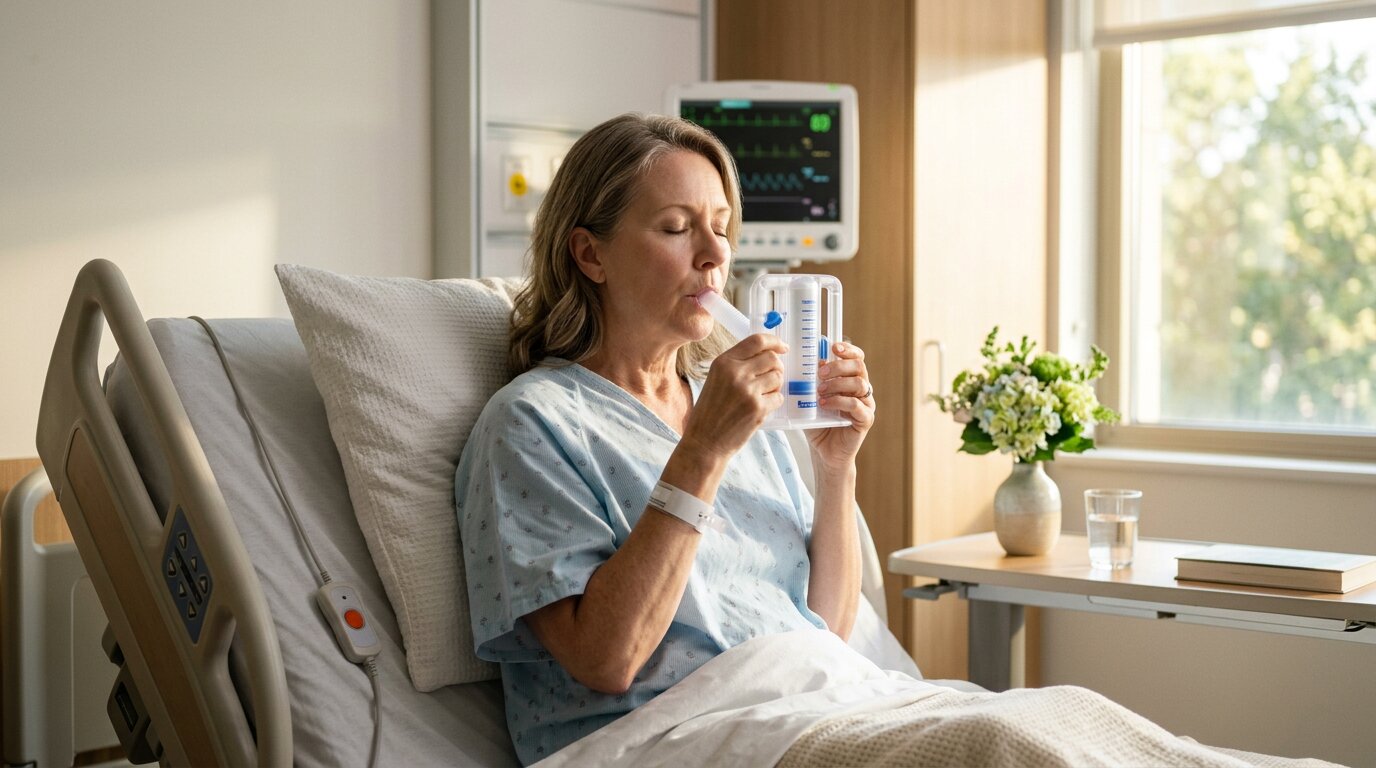
Activity is typically increased gradually, starting with sitting up, moving from bed to chair, and taking short walks, then slowly progressing as tolerated. Breathing exercises, including the use of an incentive spirometer, are often recommended to help expand the lungs and reduce the risk of complications such as pneumonia or atelectasis.
Adequate pain control is important, as poorly controlled pain can limit deep breathing and movement, which in turn can slow recovery and increase complication risk. If opioid medications are used, preventing constipation through adequate fluid intake, dietary fiber, and, when needed, stool softeners or laxatives is usually advised.
Regular follow-up with the surgical and oncology teams is important to monitor healing, manage symptoms, and plan any additional treatment.
Some patients may also experience chest wall pain during recovery because the ribs and surrounding muscles are affected during thoracic surgery. In certain cases, symptoms can resemble those seen with rib injuries or even an actual fractured rib, which refers to a crack or break in one of the bones that protect the chest cavity. Rib fractures commonly occur after trauma, severe coughing, or surgical stress to the chest wall and can cause sharp pain that worsens with breathing, coughing, or movement. Usually, fractured rib treatment focuses on pain management, breathing exercises, rest, and gradual return to activity, since maintaining adequate breathing is important to prevent complications such as pneumonia.
Physicians carefully evaluate persistent or worsening pain after surgery to distinguish normal post-operative discomfort from complications involving the ribs, lungs, or surrounding tissues.
Your First Hours After Lung Cancer Surgery: Recovery Room, ICU and Ward
As the anesthesia wears off, you'll usually be in the recovery room (post‑anesthesia care unit, or PACU). There, a nurse closely monitors your breathing, heart rate, blood pressure, temperature, and oxygen levels.
You'll receive oxygen through a mask or nasal cannula, and typically have one‑to‑one nursing care for several hours; in some cases, this may continue overnight, depending on your condition and the hospital’s protocols.
Some patients are taken directly to an intensive care unit (ICU) or high‑dependency unit after surgery. This is more common after longer or technically complex operations, or if the person has other medical problems or reduced fitness beforehand.
The aim is to allow more intensive monitoring and rapid intervention if complications arise.
Once your vital signs are stable and your care team is satisfied with your progress, you'll be moved to a regular ward. On the ward, staff continue to monitor your recovery, adjust pain relief, and support you with early mobilization, such as sitting up in bed, standing, and taking short walks.
Early movement is encouraged because it can help reduce the risk of complications such as blood clots and chest infections, and can support lung function after surgery.
Tubes, Drains and Monitors After Lung Cancer Surgery
Once you're settled in the recovery area or ward, your healthcare team will explain the tubes, drains, and monitoring devices used after lung cancer surgery. These are intended to support breathing, circulation, and fluid balance while you recover.
You will likely have intravenous (IV) lines that deliver fluids, antibiotics, pain relief, and other medications. In some cases, these are placed in a larger vein in the neck or upper arm (a central or PICC line) to allow more reliable access and to give certain drugs safely.
A chest drain (chest tube) is usually placed between the ribs into the pleural space, the area around the lung. Its purpose is to remove air, blood, and other fluids so the lung can re-expand and stay fully inflated. Staff measure the amount and type of drainage and watch for air leaks. These observations help determine when the chest tube can be removed safely.
You may also have a Foley catheter, a tube placed into the bladder to drain and measure urine. This helps the team monitor kidney function and fluid balance, especially in the first hours after surgery.
In some patients, an arterial line (a thin tube in an artery, usually in the wrist) is used to monitor blood pressure continuously and to obtain blood samples for tests such as blood gases without repeated needle sticks.
Pain Control and Incision Care at Home
Even after you leave the hospital, managing pain and caring for your incisions at home are important for your recovery.
Take pain medicine exactly as prescribed. This may include a regular schedule of medication, with an additional dose allowed for stronger “breakthrough” pain if your provider has ordered it. Taking a dose 30–45 minutes before planned activity (such as walking, coughing exercises, or physical therapy) can help you move, breathe deeply, and participate in recovery activities more comfortably.
When your care team has confirmed it's safe to do so (often about 48 hours after chest tube removal), you may usually begin showering once a day. Let warm water and mild soap run gently over the incision sites, then pat the area dry with a clean towel. Don't rub the incisions, as this can irritate the skin and delay healing.
In most cases, incisions should be left open to the air once they're dry, as this can promote healing. Use small adhesive bandages only over areas that are still draining, and change them as directed by your healthcare provider.
To reduce the risk of constipation, drink adequate fluids (if not restricted for other medical reasons), use the bathroom regularly, and follow your provider’s advice about stool softeners or laxatives. Constipation can increase discomfort and strain, which may make pain harder to control.
How Much To Walk and Exercise After Surgery
Most people begin moving relatively soon after lung cancer surgery, and walking is an important part of recovery.
Within about 12 hours, you'll usually sit out of bed and may take a short walk with staff support.
Over the next few days, this typically increases to walking in the corridor.
In hospital, aim to walk about every two hours while you're awake, if your care team agrees.
After you go home, walk as much as feels comfortable.
If you become short of breath, stop and rest, then resume when your breathing has improved rather than forcing yourself to continue.
Gradually increase your walking distance and time over several weeks.
Try to avoid remaining in bed or in one position for long periods, as prolonged inactivity can increase the risk of complications such as blood clots and deconditioning.
Follow any specific instructions from your surgical and rehabilitation team, including prescribed breathing and coughing exercises.
Eating, Sleep and Coping With Fatigue During Recovery
As you gradually increase your walking and daily activities, your nutrition, sleep patterns, and approach to fatigue will affect the pace and quality of your recovery.
A reduced appetite is common, so smaller, more frequent meals and choosing foods that you tolerate well can help you meet your nutritional needs.
Many people lose up to 10% of their body weight during recovery; weigh yourself twice a week and keep a record.
If your weight increases by 2–3 lb (about 1–1.5 kg) within 24–48 hours, contact your healthcare team, as this may indicate fluid retention and requires medical assessment.
Fatigue and changes in sleep patterns may persist for several weeks.
Planning short naps during the day and increasing your activity level gradually can help you manage this.
If you're taking opioid pain medications, discuss a bowel management plan early with your healthcare team, as these medicines commonly cause constipation.
Resuming Driving, Work, Travel and Sex After Surgery
While it's understandable to want to resume normal routines, activities such as driving, working, travelling, and having sex should be restarted gradually after lung cancer surgery to reduce the risk of complications.
You are usually advised not to drive immediately after surgery. Many people return to short, local journeys between 3 and 6 weeks after surgery, but this varies.
You should only drive again once your surgeon or clinical team has confirmed it's safe, and you can move freely, control the vehicle, and are no longer taking medications (such as some painkillers) that can impair concentration or reaction time.
Returning to work depends on the type of surgery you had, your general health, and the kind of work you do.
Most people are advised to increase activity in stages and to avoid lifting more than about 10 lb (4.5 kg) for at least 3–4 weeks, and sometimes up to 4–6 weeks.
Jobs involving heavy physical work may require a longer recovery period or temporary adjustments.
Travel, especially long journeys, should usually be delayed until you can move around comfortably, manage your pain with regular medication, and are able to sit or stand for extended periods.
If you're considering air travel, you should discuss timing with your healthcare team, as factors such as lung function, recent surgery, and risk of blood clots need to be assessed.
You can usually resume sexual activity when you feel physically comfortable enough and your pain is well controlled.
It's important to avoid positions or movements that place strain on your chest or incision sites in the early weeks.
For individual advice based on your operation and recovery, contact your hospital team or call 0808 800 40 40 (9am–5pm, Mon–Fri).
Follow-Up After Lung Cancer Surgery, Survivorship and Emotional Support
Regaining day‑to‑day routines is only one aspect of recovery.
Ongoing, planned follow‑up and support are important in the months and years after lung cancer surgery.
Your first clinic appointment usually takes place 2–6 weeks after surgery to assess wound healing, review the pathology report and staging, and discuss any further treatment or monitoring that may be needed.
After this, your team will set out a longer‑term surveillance plan, particularly for the first 5 years, when there's an estimated 2–2.5% yearly risk of developing a new lung cancer.
Follow‑up care involves more than scans and tests; it also includes managing symptoms such as fatigue and breathlessness, and addressing emotional wellbeing.
If you feel low, worried, or isolated, you can ask about rehabilitation services, survivorship programmes, the Cancer Chat forum, or the nurse helpline (0808 800 40 40, 9am–5pm, Monday to Friday).
Conclusion
Recovering from lung cancer surgery is a step‑by‑step journey, not a race. You’ll build strength by walking, doing your breathing exercises, managing pain, and listening to your body’s limits. Stay in close touch with your care team and ask questions whenever you’re unsure. Lean on family, friends, and support resources. With time, patience, and follow‑up care, you can move from surgery into survivorship and focus on living your life again.